Home / Why EVOH?
EVOH is an ethylene vinyl alcohol polymer that mainly consists of carbon, oxygen, and hydrogen. The EVOH film is used in our multilayer technology as a barrier layer and protective layer and is of central importance in the food packaging industry.
Far far away, behind the word mountains, far from the countries Vokalia and Consonantia, there live the blind texts. Separated they live in Bookmarksgrove right at the coast
Far far away, behind the word mountains, far from the countries Vokalia and Consonantia, there live the blind texts. Separated they live in Bookmarksgrove right at the coast
Far far away, behind the word mountains, far from the countries Vokalia and Consonantia, there live the blind texts. Separated they live in Bookmarksgrove right at the coast
Far far away, behind the word mountains, far from the countries Vokalia and Consonantia, there live the blind texts. Separated they live in Bookmarksgrove right at the coast
Far far away, behind the word mountains, far from the countries Vokalia and Consonantia, there live the blind texts. Separated they live in Bookmarksgrove right at the coast
Far far away, behind the word mountains, far from the countries Vokalia and Consonantia, there live the blind texts. Separated they live in Bookmarksgrove right at the coast
Far far away, behind the word mountains, far from the countries Vokalia and Consonantia, there live the blind texts. Separated they live in Bookmarksgrove right at the coast
Far far away, behind the word mountains, far from the countries Vokalia and Consonantia, there live the blind texts. Separated they live in Bookmarksgrove right at the coast
Far far away, behind the word mountains, far from the countries Vokalia and Consonantia, there live the blind texts. Separated they live in Bookmarksgrove right at the coast
Far far away, behind the word mountains, far from the countries Vokalia and Consonantia, there live the blind texts. Separated they live in Bookmarksgrove right at the coast
Far far away, behind the word mountains, far from the countries Vokalia and Consonantia, there live the blind texts. Separated they live in Bookmarksgrove right at the coast
Far far away, behind the word mountains, far from the countries Vokalia and Consonantia, there live the blind texts. Separated they live in Bookmarksgrove right at the coast
Far far away, behind the word mountains, far from the countries Vokalia and Consonantia, there live the blind texts. Separated they live in Bookmarksgrove right at the coast
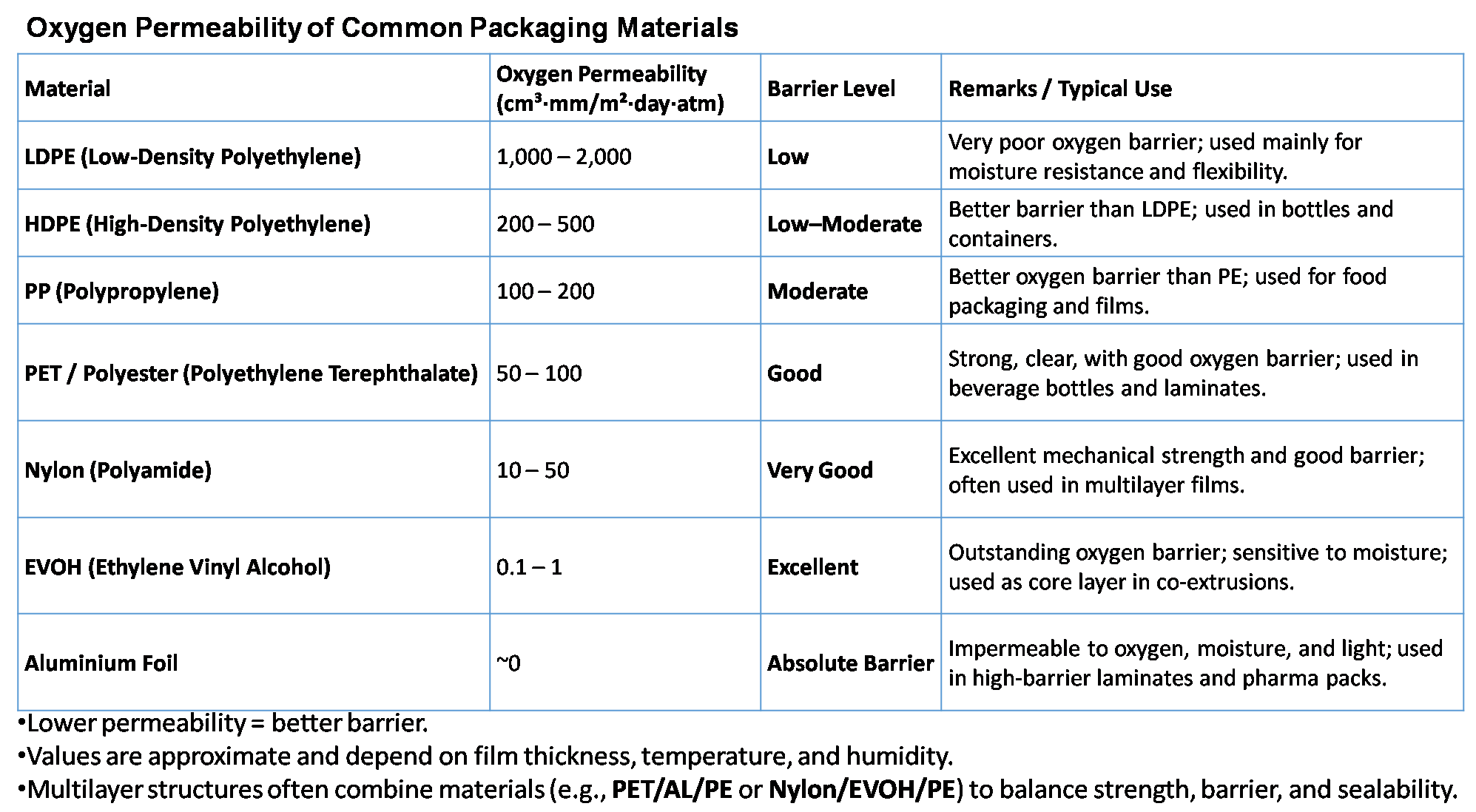
The choice of barrier material is critical to product shelf life, sustainability goals, and production costs. While aluminium has been the traditional standard, EVOH (Ethylene-Vinyl Alcohol Copolymer) is quickly emerging as the superior material for modern packaging needs.
Based on our performance analysis (Rating 1-5, 5 being best), here is a data-driven breakdown of how these two materials stack up across key metrics.
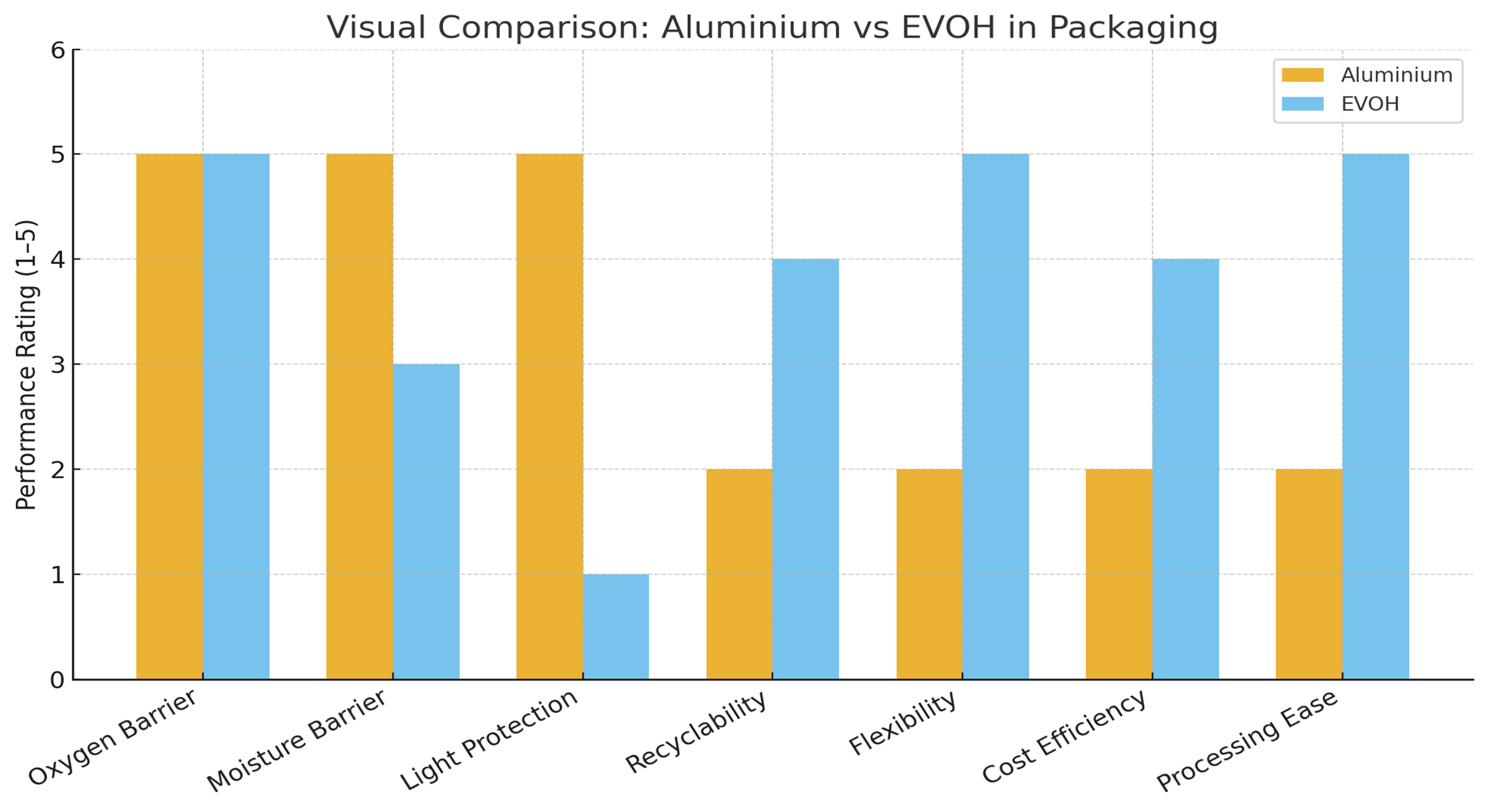
| Aspect | Aluminium (Foil Layer) | EVOH (Ethylene Vinyl Alcohol) |
|---|---|---|
| Barrier Performance (Oxygen & Moisture) | ✅ Excellent — Absolute barrier to oxygen, moisture, light, and aroma. | ✅ Excellent oxygen barrier, but ⚠️ moisture sensitive — barrier drops in humid conditions. |
| Light Protection | ✅ Completely blocks UV and visible light. | ❌ Transparent — provides no light protection. |
| Recyclability & Sustainability | ⚠️ Difficult to recycle in laminates (especially with plastics); energy-intensive to produce. | ✅ More environmentally friendly; can be recycled with polyolefins if used in small percentages. |
| Flexibility & Transparency | ❌ Not transparent; can crack or pinhole under flexing. | ✅ Transparent and flexible; suitable for transparent multilayer films. |
| Mechanical Strength | ✅ Good stiffness and puncture resistance (in laminates). | ⚠️ Moderate; typically requires support layers (e.g., nylon, PET). |
| Cost | ⚠️ Relatively expensive due to metal and energy costs. | ✅ Cost-effective in thin layers (co-extruded or laminated). |
| Processing | ⚠️ Needs lamination; not co-extrudable with most polymers. | ✅ Co-extrudable with PE, PP; easy to integrate in multilayer films. |
| Use Cases | High-barrier packaging for pharmaceuticals, dry powders, coffee, retort pouches. | Used as oxygen barrier layer in food, beverage, and cosmetic packaging. |
Aluminum is preferred when total protection from oxygen, moisture, and light is required — ideal for long shelf life and sensitive products (like pharma, coffee, or retort foods). EVOH is chosen when transparency, recyclability, and lightweight packaging are priorities — suitable for food and beverage applications where moisture exposure is controlled.
| Property | Aluminium Foil Laminate (e.g., PET/Al/PE) | PP/EVOH Laminate (e.g., PP/EVOH/PP) |
|---|---|---|
| Oxygen Permeability | ~0 (absolute barrier) | Very low — typically 0.1–1 cm³·m⁻²·day⁻¹·atm⁻¹ depending on EVOH thickness and humidity. |
| Water Vapour Permeability | ~0 (absolute barrier) | Moderate — 0.5–2 g·m⁻²·day⁻¹ depending on EVOH ratio and PP outer layers. |
| Light Barrier | Total — completely blocks UV and visible light. | Transparent — no light protection. |
| Humidity Sensitivity | Stable under all conditions. | High — EVOH barrier drops significantly when humidity exceeds 60%. |
| Shelf Life Performance | Excellent (long-term) | Good to very good, but shorter for moisture-sensitive products. |
EVOH layer provides excellent oxygen barrier — nearly comparable to aluminum under dry conditions.
However, EVOH’s performance drops in high humidity, as it absorbs moisture, allowing more oxygen to pass.
PP helps protect the EVOH layer from humidity to some extent, but cannot completely prevent it.
Aluminum foil, being metallic and impermeable, gives absolute protection against both oxygen and water vapour, regardless of environment.
| Aspect | Aluminium Laminate | PP/EVOH Laminate |
|---|---|---|
| Barrier Quality | ✅ Superior (Total barrier) | ⚠️ High but humidity-sensitive |
| Weight & Flexibility | ❌ Heavier and less flexible | ✅ Lightweight and flexible |
| Recyclability | ❌ Poor (metal-plastic mix) | ✅ Better (all-polyolefin structure possible) |
| Cost | ⚠️ Higher | ✅ Lower |
| Environmental Footprint | ⚠️ High (energy-intensive) | ✅ Lower carbon footprint |